
Gotta protect those eyes!

Gotta protect those eyes!

I’ve already gotten sucked into the amazing synth app noise.io, which is an incredibly powerful synth for you iPhone or iPod Touch. I’ve also been going back and forth trying to figure out how to realize my dream of electronic music and beats mixed with killer live guitar tones. That has led me to Reason 4.0 and the Akai MPC. The latter is a series of stand-alone units that work as samplers and recording studios. An MPC style controller might be ideal for getting the most out of the powerful Reason 4.0 software, but I know nothing about working such a controller, and they’re not free.
Along comes an iPhone app with a forty-one page instructions manual. BeatMaker features an interface that borrows heavily from both Reason and the MPC, complete with 16 virtual pads to tap out my imagined rhythms. At $20, it might be one of the most expensive apps for sale at iTunes, but it’s still about ten times less than a controller that may or may not work with Reason and that I definitely don’t know how to use. I think BeatMaker looks like a pretty good alternative. I’m willing to bet that after I read those forty-one pages, I’ll be a lot closer to understanding what to do with reason and a good trigger-pad/MPC-style controller than I am now. And I won’t have spent any more than $20.
The other aspect of BeatMaker that is intriguing is an app for your desktop/laptop that lets you take your beats off the phone/pod and actually do something with them. Now we’re talkin! And while I may be a bit far from getting that done, I’ve no doubt that, within the next few days, it’ll get done.

Last night I was as good as my word. I put a set of DR 10’s on my old Travis Bean TB1000S. I didn’t really get to far beyond giving the old girl new strings, getting in tune and giving her a haircut. My deposition ended a bit early because my client blew me off. Glad he’s so involved in the case, that painintheass! Anyway, I got back around four, downed a Red Bull and got out of my work clothes to see how those new strings felt. Well, I ended up rocking out so hard that the pickguard came off, as did one of the tone knobs. It was awesome! Sorry neighbors.
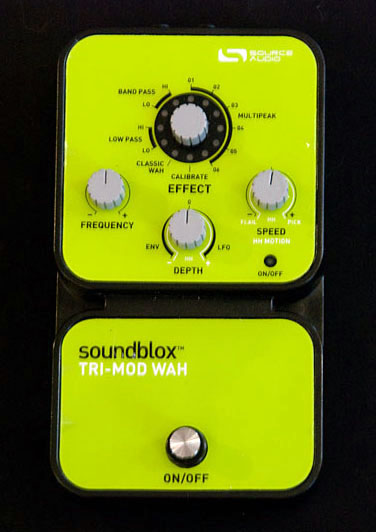
I’ve never been too good with the wah-wah rocker pedal. Volume pedal is a different story, that I can handle. but the wah has never been my friend. So, several months ago, I picked up this sucker on a whim and it’s a nice sounding unit with lots of versatility. It can do envelope or LFO and the multi-peaks can get real crazy – that’s always a good thing.
Unfortunately, the switch stopped working several months ago and I foolishly never did anything about it. The unit still got power and all the settings seemed to work, but I couldn’t work the pedal. Well, last night, I decided to take a quick look inside and noticed that a spring in the switch had been overly compressed. I gently stretched out the spring and put it back in place, put all the screws back in and ta-dah! The thing is working like a charm. I’ll try to get some recording done so you can hear this beauty. It’s not earth shattering, but it’s a nice little auto-wah/filter unit.

The Phillies shoved it in the Marlins’ nose one more time today, five – zero, and they’re just cruising. Even during the ‘June swoon’, they never fell out of phirst place, and they were playing horrible. That will tell you about the competition in this division. I have read that the Red Sox, who face more of a threat in their division than the we do in ours, are considering a six-man rotation to keep their front line pitchers rested and healthy heading into the playoffs. I have to say that I love this idea, but is it a jinx? Baseball is a funny game, and you never know what can happen. Is it putting the cart before the horse to plan for the playoffs in mid-July?
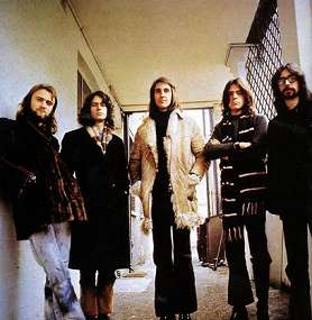
Let’s not worry about ‘prog-rock’ for a minute. I’ve no real beef with the label. Labels can be helpful, they can even be necessary. Certainly ‘jam band’ is a label. But if you’ve decided to use a label (and I am talking about you), then it’s absolutely essential to realize the infinite variety that can exist within any grouping that may share a single characteristic. There’s a lot of different kinds of prog out there. There’s a lot of different kinds of jam bands too.
So, with all that out of the way, let’s get to the topic du jour – Genesis. Here’s an easy one, an absolute, something you can hang your hat on, unchanging, objective reality. Gabriel-era Genesis was not a jam band.
Many other popular bands from 1970 through 1975 conducted sonic explorations that happened right before the audience’s very eyes. They threw caution to the wind and ventured into the world of improvisation where anything could happen. And such behavior was not limited to the Grateful Dead and the Allman Brothers, although those are two fine examples from the era. Even real prog bands would strip themselves naked of any script or predictability and just see what happened – King Crimson is a perfect example.
As Miles Davis was bringing elements of rock into jazz, bands that improvised were really bringing elements of jazz into rock. Zappa would use his entire ensemble (and sometimes an audience) as an instrument and conduct noise to tell the story or make the point. In the earliest parts of this period, Syd Barret-era Pink Floyd experimented with music/noise to match their groundbreaking visual show.
One of the most important aspects of improvised music is the relationship (or lack thereof) between the players. Ideally, great improvisation happens when the group all know one another so well that they can basically read each others’ minds. The result is that classic moment of the whole becoming a unit that is greater than the sum of its parts. Its a cliche, but in this case, it is true.
On the other hand, jams can become much more interesting by the presence of a destabilizing influence. The great example of this is Miles Davis in 1970. He spent a lot of time and did a lot of touring with band that consisted of himself on trumpet, Gary Bartz on sax, Michael Henderson on bass, Keith Jarrett on keys, Jack DeJohnette on drums and Airto on percussion. Although the band had a strong improvised element, the whole thing was beautifully thrown off one night when John McLaughlin joined on electric guitar. Everyone was thrown out of their comfort zone and the thing got even better.
So, once again, Gabriel-era Genesis was not a jam band. They composed together for five glorious years (all writing credits were always given to all five members) and their goal upon going in front of an audience was to recreate, as much as possible, the sound on the record. But with all that talent, all that original thinking, all those fancy toys, and all that affinity from years of playing, recording and touring together, I have always wondered, what would it have sounded like if THIS band jammed? What if they just started with some very basic ideas, musical germs, and noodled a bit and jammed and worked on making something from nothing? What would that sound like?
And now I know what it would sound like and it is a beautiful noise. And, in the very near future, I look forward to sharing it with you over at Blogerantz.

Now, if I only knew what the question was. Here is the search string (dimeadozen.org membership required) for those of you familiar with bittorrent and ready to listen to the likes of Steve Perry and Neal Schon talking about their remarkable skills and success for, like, an entire week. Maybe we can finally understand why ‘Don’t Stop Believing’ has taken on the extraordinary cultural significance that it now has. Or why Schon ever shaved off that killer ‘stache.

I find the whole thing to be quite surreal. You wanted a big name pitcher for the run to the post-season. It doesn’t get much bigger than this, but for the last two years, the guy has not pitched. I still remember how Steve Carlton hung on too long. he didn’t just stay past his prime, Lefty stayed past his ability to pitch to major leaguers. If you weren’t around for that episode, let me just say two words – Brett Farve.
There is really only one question that concerns me now – can he get people out? If he can get big league batters out, then he will be an asset to this team. He came across great at his press conference and any fan of the Phillies can’t help but be excited by his energy. If nothing else, his attitude is youthful and his track record erases all doubt about competitiveness.
Freddy Garcia passed a physical, but was never able to pitch properly, proved to be injured, and has no career now to speak of. So, we know the Phillies’ physicals don’t always pan out. But if Martinez can get batters out, then this will have been worthwhile.

Over at io9, there is a link to a massive analysis of why the Battlestar finale is the worst ending in sci-fi history. That’s a mighty assertion, but Brad Templeton seems to have the analysis to back it up. Unless I have a mssive flare-up of colitis and have to spend the next few hours in the men’s room, I’m not sure whe I’ll have time to read this, but one thing is for sure: any TV show that can get someone to do this kind of work is pretty powerful stuff.
And I’ll take this opportunity to keep banging the drum about what these people (Ron Moore, et al.) do for a living – they write series. A series does not have a beginning, middle and end. If you told a sponsor that you had solid gold viewership, millions of fans week in and week out, but that the show was only going to be on the air for a few months, would you get that sponsor’s support? Maybe, but networks, sponsors, show-runners, all crave stability and consistency. If it’s here today and gon tomorrow, that’s not really helpful, from a business sense.
So, who really cares if they flunked the ending? Who cares if the mysteries aren’t fully resolved and the questions aren’t once-and-for-all answered? Was it a good show? Did you enjoy watching it? Yes? Then STFU. I think the abuse of Bob Dylan in Battlestar is basically a crime against nature, but that’s not going to make me a hater. Battlestar Galactica still one of the best things to ever come out of that idiot box.

I have, for some time, wanted to set forth my thoughts on the most exciting TV show I’ve seen since the early days of Battlestar. That’s no coincidence, because, as you’ve undoubtedly heard, Virtuality and Battlestar are authored by the same creative team. The difference that on show will go down in history as a work of art that changed how we experience a sci-fi series, while the other will just fade away into nothingness, lucky to even become a footnote.
That is certainly unfair, because of the overall quality of the writing, production and performances. Don’t believe me? Check it out while you still can. Just in case you didn’t just get back from watching the ‘pilot’ episode on hulu or somewhere else, let me say the following:
SPOILER ALERT!! Proceed at your own risk!!
In the end, all I care about is whether or not it’s good TV. Is it compelling? Does it move me? Is it exciting? Do I care about the characters and story? With sci-fi, I’m not so worried about how ‘realistic’ something is. A show can be completely fanciful and even absurd in it’s premise and still be a completely kick-ass piece of drama.
From the very beginning, the viewer has constant reminders of 2001: A Space Odyssey. I think that’s an extremely dangerous trick. It’s one thing to be Quentin Tarentino drawing references to obscure movies from the 70’s, but Virtuality presents not one, but many references to 2001, an iconic movie that everyone has seen. If you want people to think about that film and your film in the same moment, then you’d better have one-hell of a product. Otherwise, you’re just going to look like a stupid jerk.
There is an all-powerful computer (Jean (gene?) instead of HAL) that may or may not be responsible for numerous problems on the ship. The problems start with the virtual reality rig that gives crew members a chance to blow off steam and get out of the loneliness and isolation of a ten-year space mission. That sense of isolation is played pitch-perfect in 2001 and that’s the reference standard. Does Virtuality measure up? All I can say is, after watching it twice, it’s pretty good. There is a strong sense, especially by the end of the ‘pilot’, that this crew is completely cut-off from anything or anyone they used to know, love or care about. That’s a pretty cool trick.
I think the Battlestar guys overplayed their hand, and that’s why we’re not getting any more of this show from Fox, or SciFi (or SyFy) or anyone else. They’re taking a major shot at the absurdity of reality TV while asking the viewer to question if what’s going on in the crew’s virtual reality modules is actually real and the disaster of their mission is not real. Got it?
Then you’ve got a multitude of stories involving: (1) a character who is confined to a wheelchair, (2) a young gay couple, (3) a young het couple where the woman is pregnant and hasn’t told her partner, (4) a husband and wife where the wife is having an affair, but only in the virtual reality modules, with another crew member, (5) a doctor who has Alzheimer’s, (6) a reality TV program which is being filmed while the mission is going on and being produced in real-time by a crew member who also serves as the ship’s shrink, (7) a psychotic killer who only lives in the virtual reality program, (8) an engineer who is writing letters to his deceased young son, (9) and a computer that’s supposed to run the ship, but has no answers about why everything sucks so bad for these folks. And, oh, by the way, the mission will take ten years and the fate of every human on earth depends on their success, unless that’s not real either.
Ron Moore said he had a plan at the beginning of Battlestar. I don’t believe that he did. As good as Battlestar was, it meandered from time to time. I think that’s the nature of even the best series television. There are so many variables and so little time between episode to make evrything hang together. And the job, as I’ve said before, is not to write a beginning, middle and end. The job in TV is to keep the thing going: keep the ratings up, keep the sponsors happy, keep the viewers coming back, keep feeding the fire.
With the number of variables that are set in motion in Virtuality, it’s impossible to imagine that anything more than the roughest outline really exists at the outset. Do they fail or succeed? What’s real and what’s virtual? Viewers want these questions answered if the series is to have any vitality. The show runner wants to give us just enough to keep us coming back, but never close the deal until the show is done. Battlestar presented a world of great variety and infinite possibility. Virtuality is just twelve people and their enormous problems. I see TV exec’s thinking that, at best this is a copy of Lost and, at worst, it’s extremely tedious and melodramatic.
So, in light of all that, it may be for the best that the series is a dead letter. I am sad that it, like the crew of the doomed starship, will slip over the ‘edge of never’, but what we are left with is a precious and ephemeral container of possibilities, unrealized, but REAL all the same. Watch Ritchie Coster‘s turn as nuclear physicist Jimmy Johnson, and tell me that performance isn’t REALly powerful. Listen to the soundtrack by Wendy & Lisa. Watch the filmmakers make reference to the finest sci-fi in the galaxy and still produce something exciting, frightening, compelling and powerful.
Maybe somehow, some way, the show will find life. That could be wonderful or it could be a mess. But the two hours with which we are left, at least for the moment, holds up as some of the best TV I have seen. Please watch.
